
Google Maps has become a key piece for local positioning.
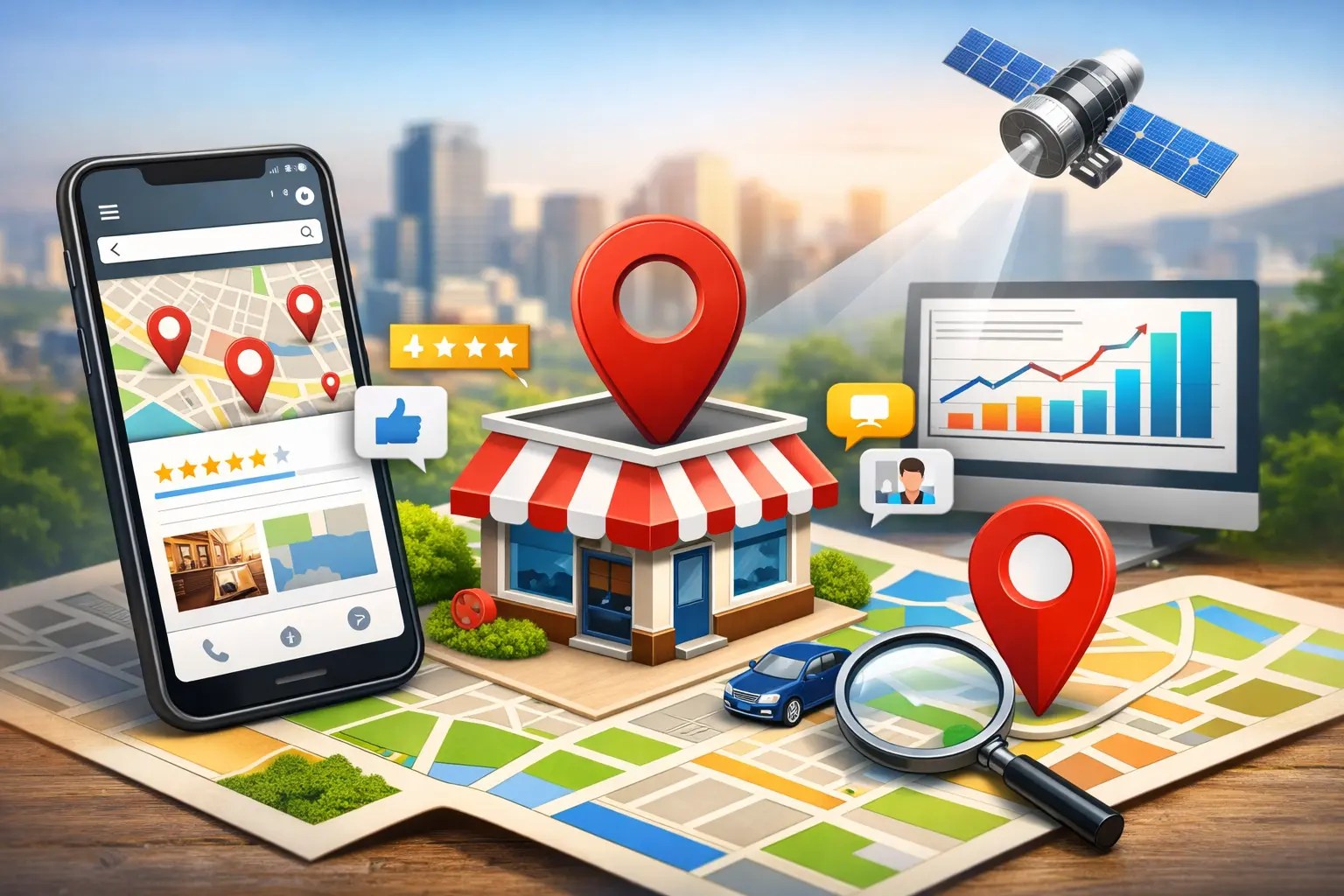 Positioning on Google Maps has become a key piece in any digital visibility strategy, especially for local businesses. In 2026, appearing in the first results of the map not only increases visibility, but directly influences users' purchasing decisions. More and more people are searching for services “near me,” and Google responds by prioritizing those businesses that best fit local search intent.
Table of Contents
Google Maps as a capture channel
Google Maps is no longer just a navigation tool, but a true customer acquisition channel. When a user performs a search with local intent, Google shows a set of featured results where geolocation, relevance and reputation play a determining role. Being present in this environment means having a competitive advantage over other businesses that have not yet optimized their local presence.
The Google Maps algorithm takes into account multiple factors, including proximity, business category, listing quality, and user interaction. Therefore, working on local SEO involves much more than simply registering a company on the platform.
Optimization of the business file
One of the fundamental pillars is the optimization of the company listing on Google. Completing all data accurately and consistently is essential to improve visibility. The business name, address, phone, and hours must be correctly configured and updated. Additionally, choosing appropriate categories allows Google to better understand business activity and display it in relevant searches.
Descriptions also play an important role. It is advisable to write them in a natural way, including terms related to the services offered and the location. It is not about overloading the text with keywords, but rather about building useful and clear content for the user.
Do you want to take your SEO positioning strategy to the next level?
Briefly explain your business and your needs. We will find your solution.
The importance of reviews
Reviews have become one of the most influential factors in positioning within Google Maps. They not only affect visibility, but also user confidence. A business with positive reviews and recent comments is much more likely to attract customers.
Encouraging customers to leave reviews is a key strategy, but so is responding to them. Interaction with users demonstrates closeness and commitment, two aspects that Google values positively. In addition, the responses allow you to naturally incorporate relevant terms that can reinforce the positioning.
Visual content and engagement
Visual content has a direct impact on business perception. Uploading quality, updated and representative photographs improves both the user experience and positioning. Images of the premises, products or equipment help build trust and increase interaction.
Google also values the activity within the listing, such as the publication of news, offers or events. Maintaining an active presence indicates that the business is up to date and engaged with its customers, which can translate into greater visibility.
Local SEO and digital consistency
Positioning on Google Maps does not depend only on the company listing, but also on the coherence of the information throughout the business's digital presence. It is essential that the data coincide on the web, social networks and external directories. This consistency reinforces credibility and makes it easier for Google to validate information.
In addition, having a website optimized for local SEO is a key factor. Including geographical references, creating specific content for the area and working on internal linking contributes to improving the relevance of the business in local searches.
In this sense, combining local SEO with digital advertising strategies can significantly boost results. For example, the use of remarketing con google ads It allows you to once again impact users who have already shown interest in the business, reinforcing their memory and increasing the chances of conversion.
Links and local authority
Authority also influences positioning on Google Maps. Getting mentions in local media, collaborating with other companies in the area or appearing in relevant directories helps reinforce your digital presence. These links not only bring traffic, but they also indicate to Google that the business is relevant within its geographic environment.
Unlike traditional SEO, here the quality and proximity of the links have more weight than the quantity. One link from local media can be more valuable than several generic links unrelated to location.
Mobile search and user behavior
The growth of mobile searches has driven the use of Google Maps as the primary tool for finding nearby businesses. Users look for speed, convenience and immediate solutions. Therefore, it is essential that all information is optimized for mobile devices and that access to data such as location or telephone number is simple.
Additionally, user actions, such as clicking to call, requesting directions, or visiting the website, are signals that Google uses to evaluate business relevance. The greater the interaction, the greater the chances of improving positioning.
Artificial intelligence and personalized results
Artificial intelligence has taken local SEO to a new level. Google is able to personalize results based on search history, exact location, and user preferences. This means that positioning is no longer completely static, but dynamic and adapted to each person.
In this context, offering a complete and quality experience is more important than ever. It is not just about appearing in the results, but about being the best option for the user at that specific moment.
To delve deeper into the official recommendations, you can consult Google's guide on company profile management at: https://support.google.com/business/. This resource provides useful information to optimize your presence on Google Maps.
The strategies of SEO positioning with Google Maps in 2026 require a comprehensive approach that combines technical optimization, reputation management and digital consistency. It is not enough to be present, it is necessary to actively work on the file, generate trust and offer a quality experience.
In an environment where local competition is increasing, standing out on Google Maps can make the difference between attracting customers or going unnoticed. The key is to understand how the local ecosystem works and adapt the strategy to respond to the real needs of users.